


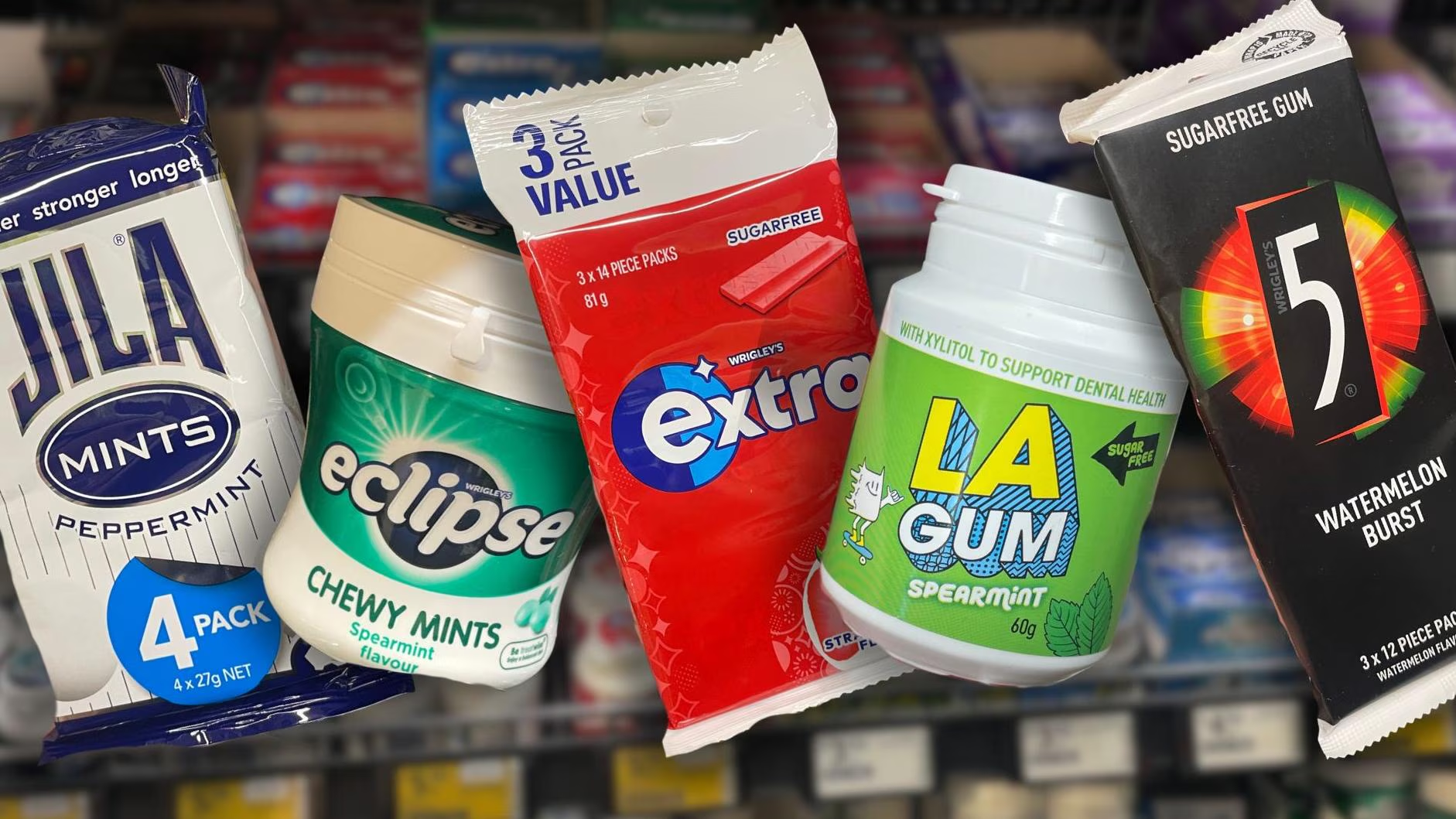
Your parents probably already say it’s disgusting but chewing gum might also send microplastic particles into your body. Find out which have the highest levels of plastic and why to steer clear.
Should chewing gum be called chewing plastic?
It might be closer to the truth, after a health researcher warned that chewing on gum exposed you to thousands of microplastic* particles.
Popular brands like Extra, Eclipse and Juicy Fruit listed a “gum base” in their ingredients, but what this gum base was made of wasn’t clearly described on the label.
Macquarie University School of Natural Sciences research fellow Dr Yunlong Luo said most gums contained plastic or petroleum*-derived polymers*.
Dr Luo said a “gum base” was typically made of plastic polymers like polyvinyl acetate*, an ingredient used to make PVA glue, and polyethylene*.

Chewing on gum – or chewing on the same stuff that is in car tyres?
“Chemically speaking, the materials used are the same as plastic bags, glues and car tyres,” he said.
While they were technically “food safe”, these chewing gums would still release hundreds of microplastics, he said.
University of Technology Sydney Professor Brian Oliver said whether the plastic was made by humans or nature (tree gums), it would still put anyone chewing it at risk of microplastic exposure.
While it was unclear how harmful microplastics were, it would not be good for your health, he said.
“They’re definitely going in your gut and they’re not going to be good for you,” he said.
Prof Oliver added that animal research showed that microplastic exposure almost always caused harm.
“If you feed animals microplastics, you almost always end up in disease,” he said.
He also said that children were at greater risk than adults.

Professor Brian Oliver. Picture: supplied
PLASTIC EXPOSURE
Queen’s University Belfast researchers found more than 250,000 microplastics in saliva from samples taken after an hour of chewing gum.
They said nanoplastics* – which were even smaller than microplastics and could pass through biological barriers* – were also detected in all samples collected from chewing gum.
Dr Luo said gum created a greater risk of exposure than plastic food containers like lunch boxes.

Now we know that microplastics are everywhere.
“With chewing gums, we cause a lot of mechanical wear to the material and the stress we create can cause tiny fragments to break,” he said.
“Microplastics are not originally there, we are causing damage to them and tiny pieces are breaking off.”
But given the unknowns, Dr Luo said he was not ruling them out completely.
“I wouldn’t say to stop eating them, because we don’t know yet and compared with other exposure pathways, this may be pretty insignificant.”

Gum is sticky – perhaps that should be a clue that it contains the same polymers used in products like glue.
Griffith University’s Dr Shima Ziajahromi also said not to panic, as micro and nanoplastics were detected in many foods like seafoods and even fruits and vegetables.
“The health impacts are still not fully understood, but some studies have linked microplastics and nanoplastics to issues like cancer, infertility*, and dementia*,” she said.
“We know there is the risk, but we don’t know what the actual health impacts are.”

There are numerous gum options but all have gum base listed as an ingredient.
WHAT CAN YOU DO?
Healthy Food Dietitian Min Saw said while the order of ingredients on a label showed what was present in the highest amounts, without the percentages listed, it was hard to tell how much gum base was present in each type of gum.
She said the best thing to do was chew less gum.
“I’d say avoid chewing gum excessively* anyway,” she said.
“Overdoing it can also lead to bloating, jaw discomfort, and potential dental issues, not just concerns about microplastics.”

Extra has gum base in all its different gum flavours.
Listed below are gum bases in order of what experts assumed from Australian labelling conventions to contain the highest to lowest amount of microplastics.
EXTRA GUM:
Extra, one of the most popular gum brands in supermarkets, listed “gum base” on every flavour, no-sugar and extra-white option.
However, sugar-free gums were more likely to have a higher portion of gum base, as it was listed as the second ingredient in some, but the third in others, said dietitian and food scientist Dr Shyamala Vishnumohan, better known as Dr Shy.
“If “gum base” appears second, it means it’s the second-largest ingredient by weight at the time of manufacturing,” she said.
Intense sweeteners are also added to replace sugar.
Dr Shy said evolving research was showing sweeteners like aspartame (951) and acesulfame (950) were having negative impacts on good gut bacteria.

Juicy Fruit and PK gums also contain gum base.
P.K GUM:
With gum base as the second ingredient, accredited practising dietitian and Latrobe University PhD candidate Purva Gulyani said the P.K variety was likely to be present in a high portion.
HUBBA BUBBA:
A traditional favourite among kids, Hubba Bubba had a high portion of “gum base,” which was also the second ingredient in both Groovy Grape and Seriously Strawberry flavours.

Hubba Bubba – that’s a whole lot of gum base in there.
5 GUM:
5 Gum also had the “base” listed as the second ingredient.
JUICY FRUIT:
With gum base as the third ingredient, it was still present but likely to be in a smaller amount than other gums, Dr Shy said.

Just because it says “sugar free” that doesn’t mean it’s a healthy option.
PUR GUM:
This gum is aspartame free and naturally sweetened, but microplastics are likely present.
It also listed gum base as the second ingredient.
However, Dr Shy said xylitol – the natural sugar alcohol from plants – as the first ingredient was better than pure sugar or sorbitol*, especially for teeth.
“From the gut angle, sorbitol-heavy gums can trigger gastrointestinal* issues (heartburn, indigestion, bloating etc.) in some people,” she said.
“With the dental angle, sugar-based mints used frequently can increase cavities risk, so in that case, xylitol is a better swap,” she said.

Microplastics pose a risk to the environment and could be linked to several health conditions. Picture: iStock/Frank Ling
HONEST GUM:
This brand was promoted as being plastic-free because the base is made from tree sap.
A spokeswoman for Honest Gum said the brand’s claim meant their gums did not contain plastic-based or synthetic gum bases.
“Because we DO NOT USE synthetic polymers, our products are not a source of intentionally added microplastics,” she said.
However, Professor Oliver said there would still be some exposure to microplastics even though it was made from a tree gum.
GLOSSARY
- microplastic: pieces of plastic that are smaller than 5mm that have either broken off larger bits of plastic and polluted the environment or are the components of cosmetic, industrial or clothing products. Not only do they pose a risk for wildlife, they are also found in our own bodies and could be creating unforeseen health impacts in humans
- petroleum: crude oil, a naturally occurring fossil fuel that is made into petrol and plastic
- polymers: chemical substances that are made up of large molecules linked together into a chain. Polymers can be natural or human-made. Plastics are made of human-made polymers
- polyvinyl acetate: a human-made resin used to make PVA glue and water-based paint
- polyethylene: the most commonly produced plastic in the world, used to make plastic bags, bottles and containers as well as toys and other household items
- nanoplastics: extremely small particles of plastic that are invisible to the naked eye. Nanoplastics can penetrate human cells because of their microscopic size
- biological barriers: the body’s natural barriers against invaders, including the skin, gut lining and the blood-brain barrier
- infertility: being unable to have babies
- dementia: a group of brain diseases that can affect memory, thinking, behaviour, bodily control and the ability to perform daily tasks
- excessively: having it too much
- sorbitol: a sugar alcohol that is used as a substitute for sugar but can also be used as a laxative. If taken too much, it can cause bloating, gas and diarrhoea
- gastrointestinal: relating to the digestive system, including the stomach, small and large intestines and the bowel
EXTRA READING
Best and worst breakfast cereals
Junk food tells lies to your brain
What’s the problem with our nation’s health?
QUICK QUIZ
1. Which plastic polymers are typically in “gum bases” according to Dr Yunlong Luo?
2. How do we ingest microplastics and nanoplastics through chewing gum?
3. What are some other ways these tiny plastic particles enter our bodies?
4. What are two other ingredients in chewing gum and bubblegum that can have a bad effect on our health?
5. What are some diseases that microplastics have been linked to?









Leave a Reply