


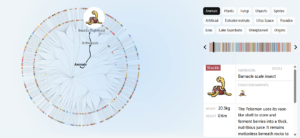
In this tree of life, we examines each Pokemon character’s closest proxies in the real world, uncovering the scientific concepts hidden in their designs. Beyond the original species, we delve into creatures from different dimensions and eras that were introduced in later versions of the game. Use the filters below to explore the similarities and differences. Those viewing this on mobile devices can click the arrow on each entry to learn more about each character.
Origins
At the heart of Pokemon is the premise of capturing all of the world’s monsters. This was inspired by Japanese developer Satoshi Tajiri’s childhood hobby of catching bugs and tadpoles. In a 1999 interview, he described the game as a way for children who grew up in cities to experience the joy of finding wildlife in rural Japan.
Underpinning the franchise is a sense of adventure. The first Pokemon game was released in two versions, Red and Green, on Feb 27, 1996, for Nintendo’s Game Boy. Players stepped into the shoes of Trainers who went on quests, capturing Pokemon which could then be trained and deployed in battle against one another. Pokemon became a social experience, as trading version-exclusive monsters was necessary to complete the Pokedex.
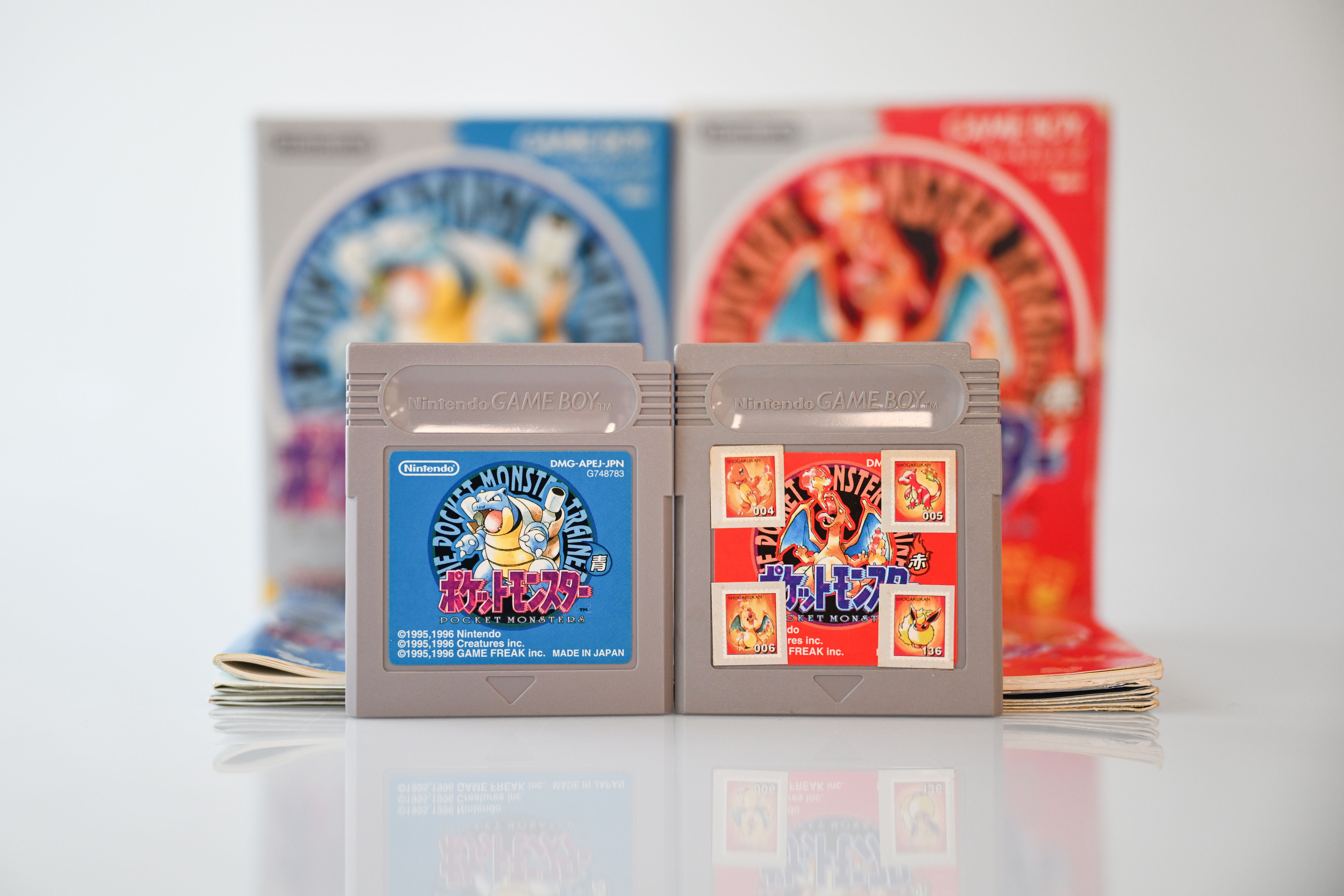
The first Pokemon Game Boy games owned by ST executive artist Billy Ker. ST PHOTO: SHINTARO TAY
Global Pokemania
Hot on the heels of the video games’ debut in 1996 came its Trading Card Game (TCG) and comic series, followed by an animated spin-off the next year. By 1999, Pokemon had become the object of a global obsession, dubbed Pokemania, as the franchise hit shelves across the world.
The franchise found a second wind in 2016 with the release of augmented-reality game Pokemon GO. The mobile game made location-based games mainstream globally, attracting crowds of players to catch Pokemon in public spaces at the height of its popularity. By January 2025, the game alone had brought in US$8 billion (S$10 billion) in revenue.
Beyond entertainment, Pokemon products have become investable collectibles. Investors in the lucrative trading card game include Canadian singer Justin Bieber and American social media personality Logan Paul, who re-sold the world’s most expensive Pokemon card for a record US$16.49 million in February 2026.
Cross-generational appeal in Singapore
In Singapore, Pokemon’s appeal transcends generations. Its fans range from a seven-year-old e-sports champion at the 2020 Pokemon Oceania International Championships with her video gaming chops to the grandmothers deemed by the creator of Pokemon GO as the app’s typical players.
For data analyst Kashvinder Singh Mann, who topped the 2023 Singapore Regional League for Pokemon’s TCG, Pokemon offers a pleasant escape from reality. Mr Singh, who also represented Singapore at the global competition that year, tells The Straits Times: “Even when times are tough and nothing seems to be going right and I need something to take my mind off things, I can always just go to my local card game shop on a Tuesday night, play some Pokemon TCG with my friends and just hang out with them.”
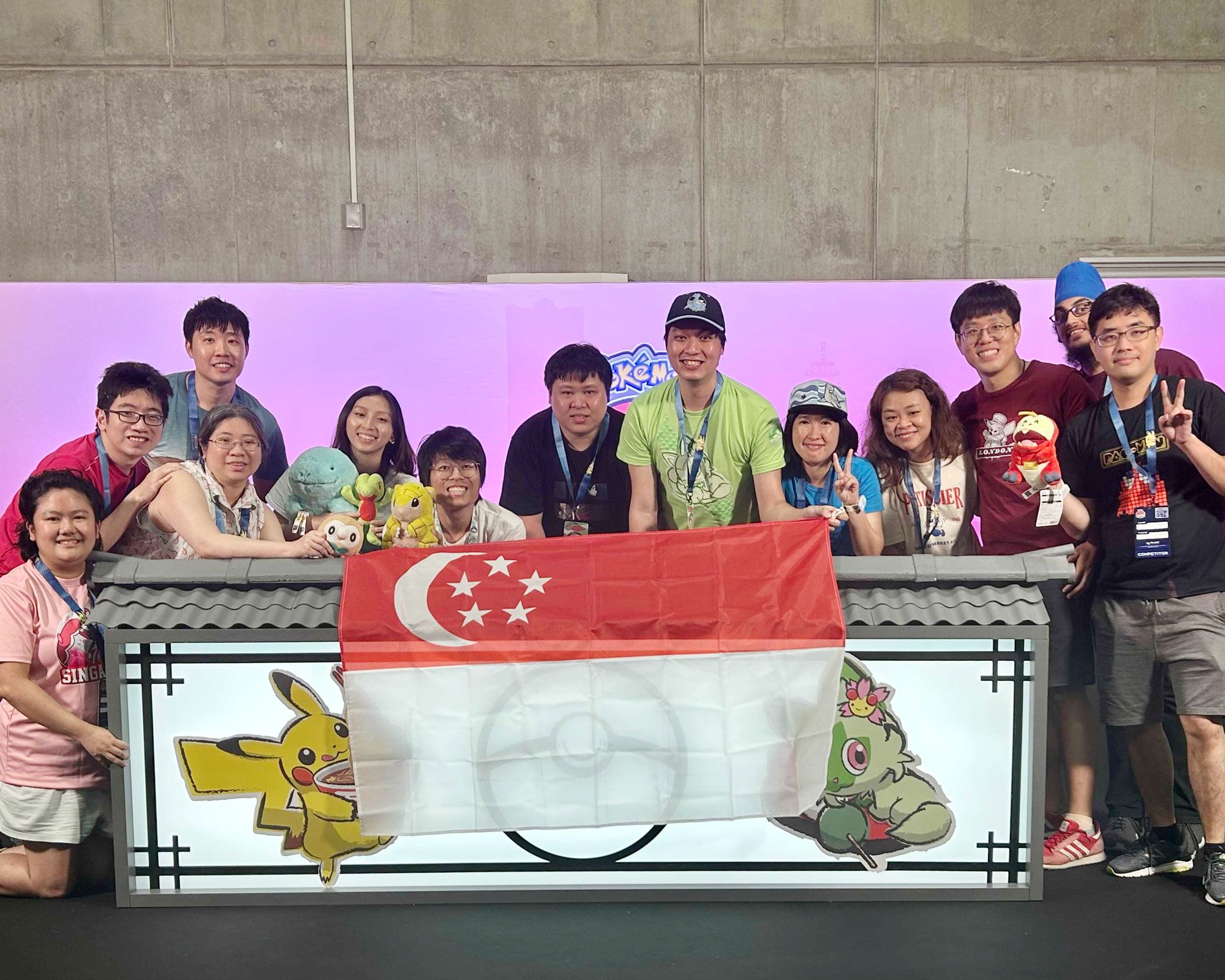
The contingent of Singapore competitors and their family members at the 2023 Pokemon World Championships held in Yokohama, Japan. PHOTO: COURTESY OF AVESTER LAU
His fellow player Avester Lau likens the draw of competitive Pokemon to an evolving game of chess, with new pieces released every few years. The meteorologist has travelled around the world for Pokemon video game tournaments and credits the hobby for helping him think critically and creatively, as well as widening his social circle.
Says the 32-year-old: “It allowed me to meet people not just in Singapore, but also from all over the world, across time zones, age groups and language barriers.”
At the core of Singapore’s Pokemon scene is its friendliness. Whether through a 110,500-strong Pokemon GO Facebook group or the tight-knit competitive community, players are supportive of one another.
Mr Singh says: “We’re always cheering for one of our own when we’re competing on a big stage, especially overseas. Even when an event is finished, there’s always a number of people who will stick around to celebrate the winners, whoever they may be.”
Gateway to science
Beyond entertainment, the franchise has grown into an unexpected gateway to science, with several researchers around the world crediting the series as inspiration for their academic pursuits.
By drawing inspiration from the natural world, the series has become a teaching tool for scientific concepts. For instance, the porcupine-like Nidoran reflects sexual dimorphism, which occurs when both sexes of the same species have different appearances.
Animals of the same species can also develop different traits, depending on their locality. This is reflected in some Pokemon living in disparate regions of the fictional universe.
A Singapore connection
Several scientists have named their discoveries after Pokemon, in a case of life imitating art. Among the scientists who have done so are Singaporean insect curator Foo Maosheng and Filipino entomologist Cristian Lucanas, who in 2023 added a cockroach to a growing list of organisms – which now number at least 16 – named after Pokemon.
The cockroach species, found in Bukit Timah Nature Reserve, was named Nocticola pheromosa, after the cockroach-like Pokemon character Pheromosa. Unlike the hardy American roaches with which most people tend to associate the pests, the new species is more delicate, as it usually lives in well-protected ecosystems.
What’s on the cards
Thirty years since the launch of Pokemon, its developers have added new lore, features and sets of monsters, otherwise known as generations.
To date, there have been nine generations of Pokemon, each introducing a new region largely inspired by geographic locations and time periods. The region of Paldea introduced in August 2022, for instance, is inspired by the Iberian Peninsula.
On its 30th anniversary, Pokemon announced that its 10th generation of characters will be released in 2027, with the game rumoured to be set in a region based on South-east Asia. Until then, fans can anticipate a slew of dedicated events to celebrate the franchise’s birthday. London’s Natural History Museum launched a science-inspired Pokemon pop-up in January 2026, causing the website to crash amid frenzy over the merchandise. Coming full circle, profits from those purchases will fund the latest scientific research.
Source: The Straits Times













Leave a Reply